

Introduction: The Power of Clarity in Industrial Imaging
In industries where precision is non-negotiable—such as semiconductor manufacturing, aerospace engineering, or medical device inspection—even the slightest optical distortion can lead to costly errors. Enter the Ultra-Low Distortion Industrial Lens, a game-changing optical component designed to eliminate image warping, color fringing, and geometric inaccuracies.
What Is an Ultra-Low Distortion Industrial Lens?
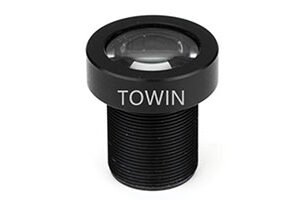
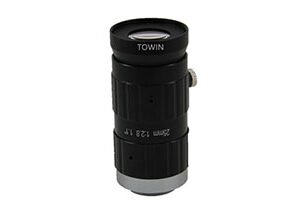
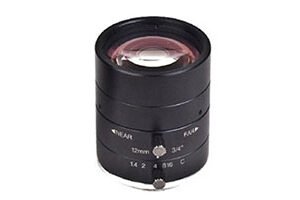
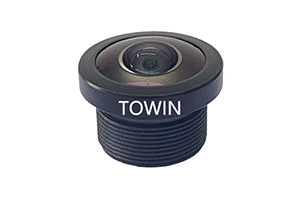
An Ultra-Low Distortion Industrial Lens is a specialized optical system engineered to minimize geometric distortions, such as barrel distortion (where edges bend inward) or pincushion distortion (where edges bend outward). Unlike standard lenses, which may introduce errors of 1% or more, ultra-low distortion variants achieve distortion levels below 0.1%, ensuring images remain true-to-life even at the edges of the field of view.
These lenses are built using advanced materials like fluorite or ED (extra-low dispersion) glass, combined with precision-ground aspherical elements to correct aberrations. Their robust housing protects against temperature fluctuations, vibrations, and contaminants, making them ideal for factory floors or outdoor settings.
Key Benefits of Ultra-Low Distortion Industrial Lenses
1. Unmatched Precision for Critical Measurements
Industries like metrology and 3D scanning rely on accurate dimensional data. A Low Distortion Lens ensures that measurements derived from images are free from warping, reducing rework and scrap rates.
2. Enhanced Image Quality Across the Entire Frame
Standard lenses often compromise edge sharpness to correct central distortions. Ultra-low distortion models maintain uniform clarity, critical for tasks like PCB inspection or defect detection.
3. Cost Efficiency Through Reduced Errors
By minimizing false positives/negatives in quality control, these lenses save companies millions in wasted materials and downtime. For example, a semiconductor fab using ultra-low distortion lenses reported a 30% reduction in defective chips.
4. Durability in Harsh Environments
Industrial settings expose lenses to dust, chemicals, and extreme temperatures. The rugged design of Ultra-Low Distortion Industrial Lenses ensures consistent performance without frequent recalibration.
5. Compatibility with High-Resolution Sensors
As cameras evolve to 50MP+ resolutions, lens distortion becomes more pronounced. Ultra-low distortion lenses future-proof systems by supporting pixel-perfect imaging.
Applications Across Industries
- Automotive Manufacturing: Inspecting engine components for microscopic cracks.
- Aerospace: Verifying the alignment of turbine blades during assembly.
- Medical Devices: Ensuring catheter tips meet exact dimensional tolerances.
- Robotics: Guiding automated systems with sub-millimeter accuracy.
How to Choose the Right Ultra-Low Distortion Industrial Lens
- Distortion Specifications: Aim for ≤0.1% distortion across the focal range.
- Wavelength Range: Ensure compatibility with your light source (e.g., UV, visible, or IR).
- Mounting Options: C-mount, F-mount, or custom designs to fit your camera.
- Environmental Resistance: Check IP ratings for dust/water protection.
FAQs
What causes lens distortion in industrial applications?
Lens distortion arises from imperfections in glass curvature or alignment. Factors like temperature changes or mechanical stress can exacerbate the issue.
How do ultra-low distortion lenses differ from standard lenses?
Standard lenses may have distortion levels of 1–5%, while ultra-low distortion models reduce this to <0.1%, ensuring near-perfect image geometry.
Can these lenses be used with any industrial camera?
Most ultra-low distortion lenses support common mounts (e.g., C-mount), but verify compatibility with your camera’s sensor size and resolution.
Are ultra-low distortion lenses worth the investment?
Absolutely. For industries where errors cost thousands per hour, the ROI from reduced defects and downtime is substantial.
What maintenance do these lenses require?
Regular cleaning with non-abrasive materials and periodic calibration (if exposed to extreme conditions) will prolong their lifespan.
Conclusion
In an era where industrial automation and AI-driven quality control are reshaping manufacturing, the demand for Ultra-Low Distortion Industrial Lenses will only grow. By delivering flawless image fidelity, these lenses empower companies to push the boundaries of innovation while maintaining rigorous quality standards.