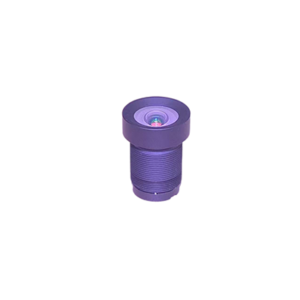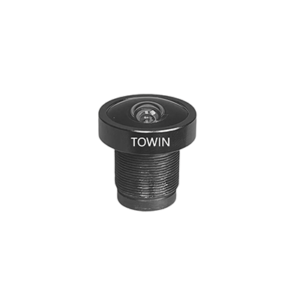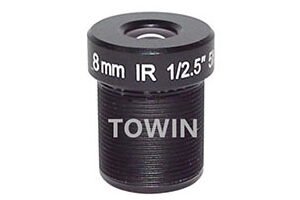


In the rapidly evolving world of technology, TOF lens systems have emerged as a game-changer, enabling unprecedented accuracy in depth sensing, 3D mapping, and motion tracking. But what does TOF stand for in TOF lens, and why is this innovation critical to advancements in fields like robotics, augmented reality (AR), and photography?
What Does TOF Stand for in TOF Lens?
TOF stands for Time-of-Flight, a principle that measures the time it takes for light or sound waves to travel to an object and back. In the context of a TOF lens, this technology uses infrared light pulses to calculate distances with remarkable precision. By emitting light and analyzing the reflected signals, TOF lenses create detailed depth maps of environments, enabling devices to “see” in three dimensions.
How Does a TOF Lens Work?
- Light Emission: The lens emits short bursts of infrared light toward a target.
- Reflection Capture: The light bounces off the object and returns to the sensor.
- Time Calculation: The system measures the time delay between emission and reflection.
- Distance Mapping: Using the speed of light, the lens calculates the distance to each point on the object, creating a real-time 3D map.
This method allows TOF lenses to capture depth data faster and more accurately than traditional stereo vision or structured light systems, making them ideal for dynamic applications like autonomous vehicles and gesture recognition.
Key Applications of TOF Lens Technology
1. Smartphone Photography and AR
Modern smartphones integrate TOF lenses to enhance portrait mode effects, autofocus speed, and AR experiences. For example, Apple’s LiDAR scanner and Samsung’s DepthVision cameras use TOF principles to improve low-light performance and object recognition.
2. Autonomous Vehicles
Self-driving cars rely on TOF lenses for obstacle detection, lane tracking, and pedestrian safety. The technology’s ability to function in real-time under varying lighting conditions makes it indispensable for navigation systems.
3. Robotics and Industrial Automation
Robots equipped with TOF lenses can navigate complex environments, manipulate objects, and perform quality control tasks with sub-millimeter accuracy. This is particularly valuable in manufacturing and logistics.
4. Gaming and Virtual Reality (VR)
VR headsets and gaming consoles use TOF lenses to track user movements without external markers, creating immersive experiences. Microsoft’s Kinect and Meta’s Quest Pro are prime examples.
Advantages of TOF Lens Over Traditional Depth Sensing
- Speed: TOF systems process data in nanoseconds, enabling real-time interactions.
- Accuracy: They deliver millimeter-level precision, even in low-light conditions.
- Compact Design: TOF lenses are smaller and more energy-efficient than alternatives like structured light.
- Scalability: The technology adapts to various distances, from microscopic measurements to long-range surveillance.
The Future of TOF Lens Technology
The global TOF lens market is projected to grow exponentially, driven by demand in automotive, healthcare, and consumer electronics. Innovations like solid-state TOF and integration with AI promise to unlock new use cases, such as medical imaging and smart retail solutions.
FAQs
What is the primary function of a TOF lens?
A TOF lens measures distances by calculating the time light travels to an object and back, enabling 3D mapping and depth sensing.
How accurate are TOF lenses?
TOF lenses typically achieve millimeter-level accuracy, depending on the sensor quality and environmental conditions.
Can TOF lenses work in complete darkness?
Yes! TOF lenses use active infrared illumination, allowing them to function in low-light or no-light environments.
What does TOF stand for in TOF lens, and why is it important?
TOF stands for Time-of-Flight, a critical technology for real-time depth perception. Its importance lies in enabling machines to interact with the physical world accurately, paving the way for innovations like autonomous vehicles and AR.
How do TOF lenses improve smartphone cameras?
TOF lenses enhance autofocus speed, portrait mode effects, and AR functionality by providing precise depth data for image processing algorithms.
Conclusion
From enhancing smartphone photography to powering self-driving cars, TOF lens technology is reshaping how machines perceive and interact with the world. By understanding what TOF stands for in TOF lens systems—Time-of-Flight—we gain insight into a future where precision and speed redefine innovation.