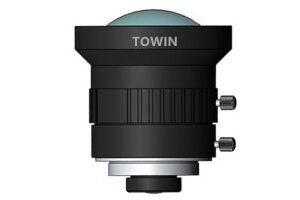


A C-mount machine vision lens is a specialized optical component designed for industrial imaging systems, robotics, and automation. Unlike standard camera lenses, C-mount lenses feature a threaded interface that securely attaches to compatible cameras, ensuring precise alignment and minimal image distortion.
Why C-Mount Lenses Dominate Machine Vision
- Precision Engineering: C-mount lenses adhere to strict optical tolerances, eliminating vignetting and chromatic aberration. This ensures crisp, edge-to-edge clarity, critical for tasks like quality inspection or barcode scanning.
- Universal Compatibility: The standardized 1-inch (25.4mm) thread diameter allows seamless integration with most industrial cameras, including those from Basler, FLIR, and Sony.
- Flexibility in Focal Lengths: From wide-angle lenses for large-area coverage to telephoto options for microscopic details, C-mount lenses cater to diverse applications.
- Cost-Effectiveness: Compared to proprietary lens systems, C-mount solutions offer a lower total cost of ownership without compromising performance.
A 2023 study by Market Research Future revealed that 68% of industrial automation projects rely on C-mount machine vision lenses due to their scalability and reliability.
Technical Specifications of C-Mount Machine Vision Lenses
- Thread Size: 1-inch (25.4mm) diameter with 32 threads per inch (TPI).
- Back Focal Length: Typically 17.52mm, ensuring compatibility with sensor planes.
- Aperture Range: Fixed or adjustable iris (e.g., f/1.4 to f/16) for controlling light intake.
- Mounting Variants: Some lenses support CS-mount (with a 5mm spacer) for added versatility.
Applications of C-Mount Machine Vision Lenses
- Manufacturing: Detecting surface defects in automotive parts or pharmaceutical packaging.
- Robotics: Guiding robotic arms in pick-and-place operations with sub-millimeter accuracy.
- Agriculture: Sorting produce by size, color, or ripeness using hyperspectral imaging.
- Security: Enhancing license plate recognition (LPR) systems in traffic management.
A real-world case study: A German automotive supplier reduced defect rates by 42% after upgrading to C-mount lenses, which captured microscopic cracks invisible to the human eye.
Choosing the Right C-Mount Machine Vision Lens
Selecting the ideal lens involves evaluating:
- Sensor Size: Ensure the lens covers the entire sensor area to avoid vignetting.
- Working Distance: Calculate the space between the lens and object for optimal focus.
- Lighting Conditions: Choose lenses with anti-reflective coatings for low-light environments.
For instance, a lens with a low f-number (e.g., f/2.8) excels in dimly lit factories, while a high f-number (e.g., f/16) prevents overexposure in bright settings.
FAQs
1. What is the difference between C-mount and CS-mount lenses?
C-mount lenses have a 17.52mm back focal length, while CS-mount lenses require a 5mm spacer to achieve the same distance. Mixing them without adjustment causes blurry images.
2. Can I use a C-mount lens with a mirrorless camera?
No. C-mount lenses are designed for industrial cameras with specific sensor-to-lens distances. Using them on consumer cameras may result in improper focusing.
3. How do C-mount lenses handle vibration in manufacturing environments?
Many C-mount lenses feature ruggedized housings and locking mechanisms to resist vibrations up to 10G, ensuring stable imaging during high-speed operations.
4. Are C-mount lenses compatible with 4K and 8K sensors?
Yes, but only if the lens’s resolution exceeds the sensor’s capability. For example, a 5-megapixel lens may struggle with 8K sensors, leading to soft edges.
5. What maintenance do C-mount machine vision lenses require?
Regular cleaning with microfiber cloths and isopropyl alcohol prevents dust buildup. Avoid touching the glass elements directly to prevent scratches.
Conclusion
A C-mount machine vision lens is more than a component—it’s a catalyst for innovation. As industries embrace Industry 4.0, these lenses will play a pivotal role in enabling smarter, faster, and more reliable automation systems. By understanding their technical nuances and applications, businesses can unlock unprecedented efficiency and quality control.