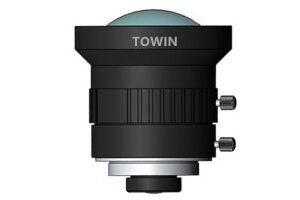


Machine vision systems rely on high-performance lenses to capture, analyze, and interpret visual data with precision. Among the various lens types available, the F-mount machine vision lens stands out as a robust and versatile choice for industrial applications.
What is an F-Mount Machine Vision Lens?
An F-mount machine vision lens is a specialized optical component designed for industrial imaging systems. The “F-mount” refers to its compatibility with Nikon’s F-bayonet mount, a standard interface widely adopted in machine vision cameras. This mount ensures secure attachment, precise alignment, and compatibility with a range of sensors, from low-resolution to high-megapixel cameras.
The lens itself is engineered to deliver sharp, distortion-free images while handling varying lighting conditions and environmental challenges. Its design prioritizes optical clarity, durability, and adaptability, making it ideal for applications like quality control, robotics, and 3D scanning.
Key Features of F-Mount Machine Vision Lenses
- High Optical Resolution: F-mount lenses support sensors with resolutions up to 50 megapixels, ensuring detailed image capture even in fine-detail tasks.
- Flexible Focal Lengths: Available in fixed and zoom variants, these lenses adapt to diverse working distances and fields of view.
- Low Distortion: Advanced coatings and lens elements minimize geometric distortions, critical for measurement accuracy.
- Environmental Resistance: Many models are built to withstand dust, vibrations, and temperature fluctuations, ensuring reliability in harsh conditions.
- Compatibility: The F-mount standard allows seamless integration with cameras from brands like Basler, FLIR, and Allied Vision.
Applications of F-Mount Machine Vision Lenses
The versatility of F-mount machine vision lenses makes them indispensable across industries:
- Manufacturing: Inspecting product defects, verifying assembly accuracy, and measuring dimensions.
- Pharmaceuticals: Ensuring pill count accuracy, label verification, and packaging integrity.
- Automotive: Monitoring welding quality, component alignment, and surface finish.
- Electronics: Detecting solder joint defects, PCB trace continuity, and component placement.
- Logistics: Barcode reading, package dimensioning, and sortation automation.
For example, a semiconductor manufacturer might use an F-mount lens to inspect wafer surfaces for microscopic defects, leveraging its high resolution and low distortion to achieve 99.9% accuracy.
Advantages Over Alternative Lens Mounts
While C-mount and CS-mount lenses are common in machine vision, the F-mount offers distinct benefits:
- Larger Sensor Support: F-mount lenses accommodate full-frame and medium-format sensors, enabling higher resolution and sensitivity.
- Future-Proofing: As sensor technology advances, F-mount lenses remain compatible with newer, higher-megapixel cameras.
- Cost Efficiency: Despite their premium features, F-mount lenses often provide better long-term value due to durability and adaptability.
How to Choose the Right F-Mount Machine Vision Lens
Selecting the ideal lens involves evaluating:
- Sensor Size: Ensure the lens’s image circle covers your sensor (e.g., 1”, 2/3”, or full-frame).
- Resolution: Match the lens’s resolving power to your camera’s megapixel count.
- Focal Length: Calculate the required working distance and field of view.
- Aperture: A wider aperture (lower f-number) improves low-light performance but may reduce depth of field.
FAQs
1. What makes F-mount lenses suitable for industrial use?
F-mount lenses combine rugged construction, high optical performance, and compatibility with advanced sensors, making them ideal for demanding environments.
2. Can I use an F-mount lens with a non-Nikon camera?
Yes! Many machine vision cameras adopt the F-mount standard, regardless of brand. Always verify compatibility with your camera’s specifications.
3. Are F-mount lenses more expensive than C-mount lenses?
While F-mount lenses may have a higher upfront cost, their durability and adaptability often justify the investment, especially for high-resolution applications.
4. How do I maintain an F-mount machine vision lens?
Regularly clean the lens with a microfiber cloth and avoid touching the glass. Store it in a dry, dust-free environment when not in use.
5. What is the maximum resolution an F-mount lens can support?
Modern F-mount lenses can support sensors exceeding 100 megapixels, though compatibility depends on the lens’s design and the camera’s sensor size.
Conclusion
The F-mount machine vision lens represents a pinnacle of optical engineering, blending versatility, durability, and high performance. Whether in automotive manufacturing or pharmaceutical quality control, its ability to deliver crystal-clear images under challenging conditions makes it a cornerstone of modern automation.