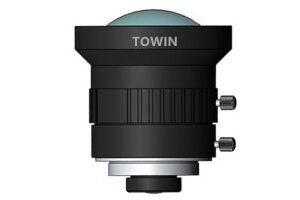


Machine vision lenses are the cornerstone of automated imaging systems, enabling robots, quality control systems, and industrial processes to “see” with precision. One of the most vital parameters in these lenses is the field of view (FOV), a concept that dictates the scope of observable area in a single image.
What is the Field of View (FOV) in Machine Vision Lenses?
The field of view (FOV) refers to the angular or linear extent of the observable world visible through a Machine vision lens at a given distance. In simpler terms, it’s the “window” through which the lens captures an image. FOV is typically measured in degrees (angular FOV) or millimeters (linear FOV, such as width or height at a specific working distance).
How is FOV Calculated in Machine Vision Lenses?
The FOV of a Machine vision lens depends on three key factors:
- Focal Length: Shorter focal lengths (e.g., 8mm) produce wider FOVs, while longer focal lengths (e.g., 50mm) narrow the FOV.
- Sensor Size: Larger sensors (e.g., 1/1.8″ vs. 1/4″) capture more of the projected image, increasing FOV.
- Working Distance: The distance between the lens and the object affects the linear FOV.
The formula for linear FOV is:
FOV (Width) = (Sensor Width × Working Distance) / Focal Length
For instance, a lens with a 12mm focal length, a 1/2″ sensor (6.4mm width), and a 200mm working distance yields:
FOV = (6.4 × 200) / 12 ≈ 106.7mm
Why FOV Matters in Machine Vision Applications
Inspection Accuracy: A mismatched FOV can lead to incomplete scans or missed defects.
- Throughput: Wider FOVs reduce the number of images needed to cover an area, speeding up processes.
- Cost Efficiency: Optimizing FOV minimizes the need for multiple cameras or lenses.
Types of FOV in Machine Vision Lenses
- 1. Horizontal FOV (HFOV): The width of the observable area.
- 2. Vertical FOV (VFOV): The height of the observable area.
- 3. Diagonal FOV (DFOV): The diagonal span of the observable area, often used for circular lenses.
Factors Affecting FOV Selection
- Resolution vs. Coverage: Wider FOVs may reduce resolution per unit area.
- Lighting Requirements: Larger FOVs often need brighter illumination to maintain image quality.
- Distortion: Wide-angle lenses can introduce barrel distortion, requiring software correction.
Optimizing FOV for Your Machine Vision System
- Use telecentric lenses for applications requiring uniform magnification across the FOV.
- Combine multiple cameras with overlapping FOVs for large-area coverage.
- Leverage software stitching to merge images from narrow FOV lenses into a panoramic view.
FAQs
What is the difference between angular and linear FOV?
Angular FOV is measured in degrees and represents the lens’s viewing angle. Linear FOV is the physical size (e.g., mm) of the observable area at a specific distance.
How does sensor size impact FOV?
Larger sensors capture more of the projected image, increasing linear FOV. For example, a 1″ sensor will have a wider FOV than a 1/3″ sensor with the same lens.
Can I increase FOV without changing lenses?
Yes, by reducing the working distance or using a larger sensor. However, this may affect resolution and DoF.
What is the field of view (FOV) in Machine vision lenses for robotics?
In robotics, FOV determines how much of the environment the robot can “see” at once. Wide FOVs aid navigation, while narrow FOVs focus on object manipulation.
Are there limits to FOV in Machine vision lenses?
Yes. Extremely wide FOVs (e.g., fisheye lenses) introduce significant distortion, while ultra-narrow FOVs may require impractical working distances.
Conclusion
What is the field of view (FOV) in Machine vision lenses? It’s the gateway to precision, balancing coverage, resolution, and system complexity. By understanding FOV calculations, trade-offs, and optimization techniques, engineers can design Machine vision systems that deliver unparalleled accuracy and efficiency.