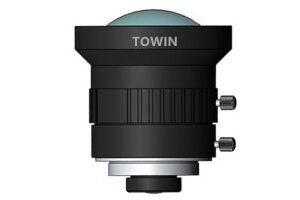


Machine vision lenses are the eyes of automated systems, enabling industries to achieve unparalleled accuracy in tasks like quality inspection, robotic guidance, and 3D modeling. One critical parameter that defines their performance is focal length.
What is the Focal Length of a Machine Vision Lens?
The focal length of a machine vision lens is the distance between the lens and the image sensor when the subject is in sharp focus. Measured in millimeters (mm), it determines the field of view (FOV) and magnification of the captured image. A shorter focal length (e.g., 8mm) provides a wider FOV, ideal for capturing large areas, while a longer focal length (e.g., 50mm) narrows the FOV, magnifying distant objects.
In machine vision applications, selecting the right focal length is crucial. For instance, a lens with a 12mm focal length might suit a conveyor belt inspection system, whereas a 75mm lens could be necessary for reading tiny barcodes on electronic components. The focal length directly impacts resolution, depth of field, and light sensitivity, making it a cornerstone of lens selection.
Key Parameters of Machine Vision Lenses
- 1. Aperture (F-number): Controls light intake. A lower F-number (e.g., f/1.4) allows more light, improving low-light performance.
- 2. Resolution: Measured in line pairs per millimeter (LP/mm), it indicates the lens’s ability to distinguish fine details.
- 3. Depth of Field (DoF): The range of distances where objects appear sharp. Longer focal lengths reduce DoF, requiring precise focusing.
- 4. Mount Type: C-mount (17.52mm flange distance) and F-mount (46.5mm flange distance) are common, ensuring compatibility with cameras.
- 5. Sensor Size Compatibility: Lenses must match the sensor format (e.g., 1/2”, 2/3”, or 1”) to avoid vignetting or resolution loss.
Towin’s Machine Vision Lenses: Precision Redefined
- Fixed Focal Length Lenses: Available in focal lengths from 6mm to 100mm, these lenses offer exceptional resolution (up to 5MP) and low distortion (<0.1%). Ideal for applications like semiconductor inspection and robotic assembly.
- Telecentric Lenses: Designed for metrology, these lenses eliminate perspective errors, ensuring accurate measurements even at varying working distances.
- Zoom Lenses: Adjustable focal lengths (e.g., 12-36mm) provide flexibility for dynamic environments, such as logistics sorting systems.
Why Choose Towin?
- High Optical Performance: Multi-element coatings minimize chromatic aberration and enhance contrast.
- Durability: Industrial-grade housing withstands vibrations and temperature fluctuations.
- Customization: Towin offers lenses with custom focal lengths, apertures, and mounting options to meet unique requirements.
FAQs
How does focal length affect image quality?
A longer focal length narrows the FOV and increases magnification, which can reduce light intake and depth of field. Conversely, a shorter focal length widens the FOV but may introduce distortion at the edges. Towin’s lenses are engineered to balance these trade-offs, ensuring optimal image quality across focal lengths.
What is the difference between a fixed focal length and a zoom lens?
Fixed focal length lenses have a constant focal length, offering superior optical performance and lower cost. Zoom lenses allow adjustable focal lengths, providing versatility but often at the expense of resolution and light sensitivity. Towin’s zoom lenses mitigate these drawbacks with advanced optical designs.
Can I use a lens with a different focal length than recommended for my sensor size?
Using a lens with an incompatible focal length may result in vignetting (dark corners) or reduced resolution. For example, a 50mm lens on a 1/2” sensor might not cover the entire sensor area. Towin’s product filters on their website help users select lenses matched to their sensor size.
Are Towin’s lenses compatible with third-party cameras?
Yes! Towin’s lenses support standard mounts like C-mount and F-mount, ensuring compatibility with most machine vision cameras. Their website provides detailed specifications to verify compatibility.
Conclusion
What is the focal length of a machine vision lens? It’s a fundamental parameter that shapes the capabilities of your imaging system. By understanding its role and pairing it with high-quality lenses like those from Towin, you can unlock precision, efficiency, and reliability in automation.