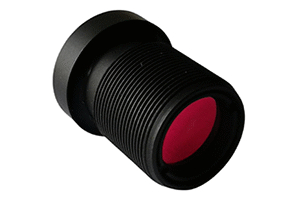


The automotive industry is evolving at an unprecedented pace, and one innovation standing out is the Wide-angle Automotive lens. This cutting-edge technology is redefining how drivers perceive their surroundings, offering unparalleled visibility and safety.
What Is a Wide-angle Automotive Lens?
A Wide-angle Automotive lens is a specialized optical component designed to capture a broader field of view than standard lenses. Typically, these lenses have a focal length shorter than 35mm (in full-frame terms), allowing them to fit more of the scene into a single frame. In automotive applications, this translates to a 180-degree or even 360-degree view, depending on the system’s configuration.
Unlike traditional rearview mirrors or narrow-angle cameras, the Wide-angle Automotive lens eliminates distortion while providing crystal-clear imagery. This makes it ideal for advanced driver-assistance systems (ADAS), surround-view cameras, and even autonomous driving technologies.
Key Features of the Wide-angle Automotive Lens
1. Ultra-Wide Field of View
The primary advantage of a Wide-angle Automotive lens is its ability to capture expansive scenes. This is crucial for detecting pedestrians, cyclists, or obstacles in low-visibility conditions.
2. Low Distortion Design
Advanced optics ensure minimal geometric distortion, preserving the accuracy of shapes and distances. This is vital for safety systems that rely on precise measurements.
3. High Durability
Built to withstand extreme temperatures, vibrations, and moisture, these lenses are engineered for the harsh conditions of automotive environments.
4. Night Vision Compatibility
Many Wide-angle Automotive lenses incorporate infrared technology, enabling clear visibility in low-light or no-light scenarios.
5. Compact Size
Despite their wide coverage, these lenses are designed to fit seamlessly into vehicle exteriors without compromising aesthetics.
Applications of the Wide-angle Automotive Lens
- Surround-View Cameras: These systems stitch images from multiple lenses to create a bird’s-eye view, simplifying parking and maneuvering.
- Blind Spot Detection: By monitoring adjacent lanes, the lens helps drivers avoid collisions during lane changes.
- Rearview Enhancement: Replaces traditional mirrors with digital displays, offering a clearer view of obstacles behind the vehicle.
- Autonomous Driving: Provides critical input for self-driving algorithms to navigate complex environments safely.
Why the Wide-angle Automotive Lens Is a Game-Changer
- Reduced Accidents: By eliminating blind spots, these lenses lower the risk of collisions during reversing or lane changes.
- Enhanced Driver Comfort: Drivers no longer need to strain to check mirrors; a quick glance at the dashboard suffices.
- Future-Proofing: As autonomous technologies advance, the Wide-angle Automotive lens will play a pivotal role in enabling Level 4 and Level 5 automation.
FAQs
Can the Wide-angle Automotive lens replace side mirrors?
Yes! Many new vehicles are replacing traditional mirrors with camera-based systems using Wide-angle lenses, as seen in the Audi e-tron and Honda E.
Are Wide-angle Automotive lenses waterproof?
Absolutely. These lenses are designed to meet IP67 or IP69K standards, ensuring they function flawlessly in rain, snow, or car washes.
Do Wide-angle Automotive lenses work in fog?
Most advanced lenses incorporate anti-fog coatings and infrared technology to maintain visibility in foggy conditions.
How long do Wide-angle Automotive lenses last?
With proper maintenance, these lenses can last the lifetime of the vehicle, thanks to their rugged construction and weather-resistant materials.
The Future of the Wide-angle Automotive Lens
The demand for safer, more efficient vehicles is propelling the Wide-angle Automotive lens into the mainstream. By 2030, the global automotive camera market is projected to reach $24 billion, with Wide-angle lenses dominating the ADAS segment.
As sensor fusion technologies improve, these lenses will integrate seamlessly with lidar and radar systems, creating a 360-degree safety net around vehicles.
Conclusion
The Wide-angle Automotive lens is not just a trend—it’s a revolutionary tool reshaping the future of transportation. By enhancing visibility, reducing accidents, and paving the way for autonomous driving, this technology is a cornerstone of modern automotive innovation.