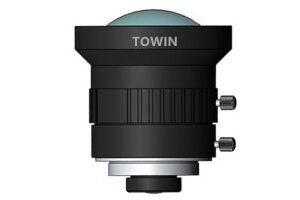


Machine Vision lenses are the eyes of industrial automation, enabling robots and systems to “see” with precision. One of the most critical yet often overlooked parameters in lens selection is the working distance for a Machine Vision lens. This distance determines how far the lens can be positioned from the object while maintaining focus, image clarity, and optimal performance. Miscalculating it can lead to blurred images, measurement errors, or even system failure.
What Is Working Distance for a Machine Vision Lens?
- Field of View (FOV): How much area the lens captures.
- Depth of Field (DoF): The range of distances where objects remain in focus.
- Lighting Efficiency: Proper spacing ensures adequate illumination without reflections or shadows.
Why Working Distance Matters in Machine Vision
1. Precision in Measurement Systems
In industries like automotive or electronics, even a 0.1mm error can be catastrophic. The working distance for a Machine Vision lens directly impacts measurement accuracy. A lens placed too close may distort the image, while one too far might lose critical details.
2. Flexibility in Robotic Applications
Robots handling variable-sized objects (e.g., packaging lines) need lenses with adjustable working distances. This adaptability ensures consistent performance regardless of object size or position.
3. Safety and Accessibility
In hazardous environments (e.g., chemical processing), a longer working distance keeps the lens and camera safe from splashes or debris. It also allows easier maintenance without disrupting operations.
4. Lighting Optimization
The working distance for a Machine Vision lens affects how light interacts with the object. Proper spacing prevents overexposure or underexposure, ensuring high-contrast images for algorithms to analyze.
How to Calculate Working Distance for a Machine Vision Lens
Working Distance = (Focal Length × Object Distance) / (Sensor Size + Focal Length)
However, real-world scenarios often require adjustments for:
- Magnification: Higher magnification lenses (e.g., telecentric lenses) have stricter working distance requirements.
- Distortion: Some lenses introduce barrel or pincushion distortion at extreme distances, affecting measurements.
- Environmental Factors: Temperature fluctuations or vibrations can shift the optimal working distance.
Factors Influencing Working Distance for a Machine Vision Lens
1. Lens Type
- Fixed-Focal-Length Lenses: Offer a single, unchangeable working distance.
- Zoom Lenses: Allow adjustable working distances but may sacrifice some image quality.
- Telecentric Lenses: Maintain constant magnification across a range of distances, ideal for metrology.
2. Sensor Size
- Larger sensors (e.g., full-frame) require longer working distances to cover the same FOV as smaller sensors (e.g., 1/2”).
3. Aperture Size
- A wider aperture (low f-number) reduces depth of field, narrowing the usable working distance range.
4. Object Size and Shape
Irregularly shaped objects may need multiple lenses or lighting setups to accommodate varying working distances.
Real-World Applications
1. Electronics Manufacturing
Inspecting tiny solder joints on circuit boards demands a lens with a short, precise working distance to capture micro-level details.
2. Pharmaceutical Packaging
Verifying pill counts or label alignment requires a medium working distance to image entire blister packs without distortion.
3. Automotive Assembly
Robotic welding systems use lenses with long working distances to avoid heat damage while maintaining focus on joints.
FAQs
How does working distance affect image resolution?
A shorter working distance can increase resolution for small objects but may reduce FOV. Conversely, a longer distance widens FOV but may lower magnification.
Can I use extension tubes to increase working distance?
Yes, but they may reduce light transmission and introduce aberrations. Telecentric lenses are a better alternative for critical applications.
Does a larger aperture improve working distance flexibility?
No—a larger aperture narrows the depth of field, making it harder to maintain focus across varying distances.
How often should I recalibrate working distance?
Recalibrate whenever the system undergoes physical changes (e.g., lens replacement, camera repositioning) or environmental shifts (e.g., temperature swings).
Final Thoughts
The working distance for a Machine Vision lens is far more than a technical specification—it’s the foundation of reliable, high-performance imaging. By understanding its role in FOV, DoF, and lighting, engineers can design systems that operate flawlessly in even the most demanding environments.